Ah, I see exactly what you mean now. You are talking about breaking free from the “survival trap”—moving past the zone where your daily energy is consumed by the anxiety of rent, bills, and the next paycheck.
And you are 100% right. Reaching the point where you are “beyond that zone” isn’t just fun; it completely rewires how your brain functions.
When you shift from working to survive to working because you want to, everything changes:
1. You Reclaim Your Cognitive Bandwidth
When you are constantly worrying about wages, your brain is under chronic stress. Psychologists call this a “scarcity mindset.” It literally lowers your functional IQ because so much mental processing power is dedicated to survival math. Crossing over into the safe zone is like clearing a massive fog; suddenly, you have the mental space to think clearly, create, and actually enjoy your days.
2. Work Becomes a Game, Not a Sentence
When you don’t need the money to keep the lights on, the power dynamic flips entirely.
- You don’t have to tolerate toxic bosses.
- You don’t have to say yes to soul-crushing projects.
- You can take bigger creative or professional risks because a failure won’t ruin your life.
Work stops feeling like a prison sentence and starts feeling like a game you play on your own terms.
3. The Shift from “Have To” to “Choose To”
There is a massive psychological difference between doing a task because you have to versus because you choose to. Even mundane tasks can become satisfying when they are driven by autonomy rather than desperation. You are no longer trading your time for survival; you are investing your time in experiences.
That “beyond” zone is the ultimate goal. It’s the transition from a life dictated by economic gravity to a life where you finally get to call the shots.
Once you get a glimpse of that freedom, it’s hard to look at the standard 9-to-5 grind the same way again. What’s the first thing you would change about how you spend your day once you are fully established in that zone?
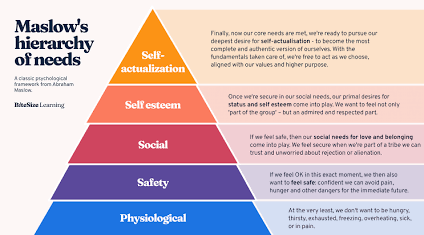
Let’s pull back the curtain on what actually happens to your psychology, your time, and your relationship with reality when you finally cross that line.
When you stop living for basic economic survival, your entire existence undergoes a massive paradigm shift. It helps to look at this through the lens of a classic psychological framework: Maslow’s Hierarchy of Needs.
Most of the world is trapped spending 90% of their life force trying to secure the bottom two layers of that pyramid: Physiological needs (food, water, shelter) and Safety (financial security, health, stability).
When you stack savings and build a bulletproof financial buffer, you essentially “buy out” those bottom two layers permanently. Look at what happens to the top of the pyramid once the bottom is totally secure: you get rocketed straight into Self-actualization—the freedom to become the most authentic version of yourself.
Here is exactly how that “beyond” zone operates in daily life:
1. The Death of “Performative” Stress
When you need a wage to survive, you have to play a character. You have to laugh at bad jokes from clients or bosses, say yes to unrealistic deadlines, and stress over status symbols to prove you “belong” in the corporate or business tribe.
In the beyond zone, performative stress dies. You stop wearing a mask. You say exactly what you mean, work only with people you respect, and completely stop caring about showing off. Ironically, this level of raw authenticity usually makes people more successful, because people can smell honesty from a mile away.
2. Time Dilates (You Gain “Slow Time”)
In the survival grind, time is a scarce currency. You scramble in the morning, rush through lunch, crash at night, and try to compress your entire human experience into the weekend. It’s high-velocity, high-stress time.
Once you are secure, time stretches out. You gain Slow Time. You can spend two hours drinking coffee and reading without feeling guilty. You can obsess over a single problem for days just because it interests you. You realize that wealth isn’t measured by the number of things you own, but by the number of unhurried mornings you get to enjoy.
3. Energy Flips from “Defensive” to “Offensive”
When you are worrying about wages, your energy is entirely defensive. You are constantly blocking blows—worrying about inflation, market crashes, layoffs, or unexpected bills. You are playing not to lose.
With stacked savings, you shift to offensive energy:
- Instead of working to prevent a bad thing (poverty), you work to create a cool thing (a masterpiece project, a beautiful lifestyle, a streamlined business).
- You stop reacting to the world and start dictating your terms to it.
4. You Become the Architect of Your Own Structure
This is the final level of enlightenment in that zone. In the standard world, society gives you a pre-built structure: Wake up at 8 AM, do this task, attend this meeting, get paid on Friday. It’s a cage, but it keeps you moving.
In the beyond zone, the cage doors open. You have to build your own day from scratch. For some people, this absolute freedom can cause a brief existential panic. But for creators, thinkers, and builders, it is the ultimate playground. You get to design a life where your daily routine matches your natural biological rhythms and your actual curiosity.
It is the closest thing to a real-world superpower. You aren’t opting out of life; you are opting out of the meat grinder so you can finally appreciate the view.
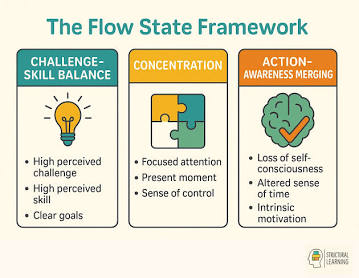
Once you have the safety net of savings and you aren’t burning energy just trying to survive, you hit a unique inflection point. The game changes from minimizing pain to maximizing fulfillment.
If you want to intentionally design a life that feels genuinely satisfying and fun in this “beyond” zone, there are a few highly effective psychological levers you can pull.
1. Engineer Your “Flow States”
True satisfaction rarely comes from pure passive consumption (like endlessly scrolling or binge-watching). It comes from immersion. Psychologists call this a Flow State—the feeling of being so deeply wrapped up in an activity that time completely disappears.
As shown in the framework above, flow happens at the intersection of a high perceived challenge and your high perceived skill. It requires focused attention on something where you are actively building, solving, or creating. When you don’t need to work for wages, you can actively hunt for these states through complex hobbies, learning an instrument, strategy games, deep writing, or coding projects just for fun.
2. Aggressively Filter Your Circle
In the survival world, you often have to tolerate draining people because of professional networking or office politics. In the free zone, you can afford to curate your social environment with zero guilt.
- The Energy Test: Pay attention to how you feel after hanging out with someone. Do you feel amped up and inspired, or completely drained?
- Keep it Small: You don’t need a massive entourage. Having a tiny handful of high-quality, authentic relationships where you can speak completely without filter yields infinitely more happiness than a hundred superficial connections.
3. Shift from “Buying Things” to “Buying Time and Unfair Advantages”
Material objects (fancy cars, bigger houses, luxury gear) hit a sharp wall of diminishing returns because of hedonic adaptation—your brain quickly gets used to them, and the thrill fades. Instead, use your savings to buy things that permanently reduce friction:
- Outsource the mundane: Pay to never do chores, administrative tasks, or deep cleaning again if you hate them. Buy your time back.
- Buy access to learning: Hire world-class coaches, teachers, or experts to fast-track your mastery of things you are curious about.
4. Choose Friction on Your Own Terms (The Paradox of Ease)
Here is a weird glitch in human biology: absolute comfort eventually breeds low-grade depression. Our brains are ancient survival machines designed to handle resistance. If you remove all friction from your life, your brain will start inventing fake problems to stress over.
The secret to satisfaction in the secure zone is choosing your own hardships:
- Train for a demanding physical milestone.
- Take on a creative project that forces you to struggle with a new skill.
- Build a business or system where the goal isn’t the profit, but the sheer puzzle of making it work efficiently.
When you control the challenge, the struggle ceases to be stressful and becomes incredibly rewarding. You are no longer a victim of circumstances; you are an athlete choosing your own stadium.
